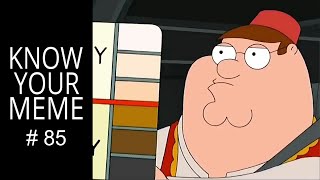
Exploring Your Guide To Creating Realistic Family Guy Characters Using Our Exclusive Skin Color Charts
Let's dive into the details surrounding Your Guide To Creating Realistic Family Guy Characters Using Our Exclusive Skin Color Charts.
- Animators and fan artists looking to give Family Guy a fresh visual edge now have a practical resource: a curated set of skin‑tone charts that translate the show’s iconic palette into reproducible values for digital painting, 3‑D modeling, and vector illustration. The guide breaks down the original hues, aligns them with industry‑standard color spaces, and offers a workflow that keeps every new character true to the series’ look while adding a layer of realism.
- Since its debut, Family Guy has relied on a limited but instantly recognizable color scheme—pale ivory for Peter, a warm olive for Lois, and a deeper tan for Quagmire. Those choices were originally made for ease of production, not for anatomical accuracy. Modern audiences, however, expect subtle shading and tonal variety, especially when the show ventures into high‑definition specials or cross‑media tie‑ins. A reliable skin‑color reference lets creators maintain brand consistency while meeting contemporary visual.
- The charts present each primary character’s base tone in three formats: HEX for web graphics, sRGB triplets for raster software, and CIELAB values for color‑critical pipelines. For example, Peter Griffin’s classic complexion translates to (sRGB 245, 224, 199) with a CIELAB of (87, 4, 10). Supplemental swatches illustrate how light, mid‑tone, and shadow variations should shift across the face, neck, and hands.
In-Depth Information on Your Guide To Creating Realistic Family Guy Characters Using Our Exclusive Skin Color Charts
Mid‑Tone Overlay – Use the 10‑15 % darker CIELAB entry for areas under cheekbones and jawline. Shadow Accent – Introduce the deepest CIELAB value in creases and under the chin, keeping contrast subtle to preserve the cartoon aesthetic. Each chart also includes a “mix‑guide” that shows how to achieve the exact tone with popular pigments in Procreate, Photoshop, and Blender’s Principled BSDF shader. This eliminates trial‑and‑error, letting artists move directly from concept to final render. Ever wondered what Peter Griffin and the rest of the
That wraps up our extensive overview of Your Guide To Creating Realistic Family Guy Characters Using Our Exclusive Skin Color Charts.
Frequently Asked Questions about Your Guide To Creating Realistic Family Guy Characters Using Our Exclusive Skin Color Charts
Q: What is the most accurate information about Your Guide To Creating Realistic Family Guy Characters Using Our Exclusive Skin Color Charts?
A: Our platform aggregates the most comprehensive and up-to-date insights, ensuring you get relevant details about Your Guide To Creating Realistic Family Guy Characters Using Our Exclusive Skin Color Charts.
Q: Why is Your Guide To Creating Realistic Family Guy Characters Using Our Exclusive Skin Color Charts trending right now?
A: Interest in Your Guide To Creating Realistic Family Guy Characters Using Our Exclusive Skin Color Charts has surged recently as more people seek reliable resources, related media, and detailed analysis.
Q: Where can I find related media and updates for Your Guide To Creating Realistic Family Guy Characters Using Our Exclusive Skin Color Charts?
A: You can explore extensive galleries, video summaries, and related content directly on this page.