Introduction to Discover Hidden Patterns In Chord Oceans For Songwriting
Exploring Discover Hidden Patterns In Chord Oceans For Songwriting reveals several interesting facts. Click Show More to Expand INFO ABOUT THIS LESSON:
Discover Hidden Patterns In Chord Oceans For Songwriting Comprehensive Overview
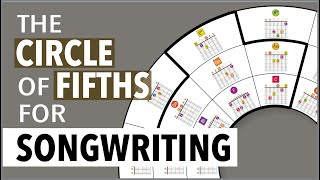
Songwriters often feel adrift in the endless expanse of possible chord progressions. Recent discussions among musicians and educators highlight a growing focus on learning how to locate hidden patterns within these “chord oceans,” a technique that promises smoother composition, richer emotional resonance, and fewer dead‑ends during the creative process. Imagine a songwriter stuck on a lyrical island, cycling through the same I‑V‑vi‑IV loop without breakthrough. By treating chord sequences as a sea rather than a static list, creators can sense repeating currents—shared intervals, modal shifts, and rhythmic anchors—that guide them toward fresh yet familiar terrain. Recognizing these invisible tides reduces trial‑and‑error, shortens the time from concept to demo, and builds confidence in navigating more complex harmonic landscapes. Start by plotting a handful of familiar progressions (e.g., ii‑V‑I in jazz, vi‑IV‑I‑V in pop) on a simple grid. Color‑code each chord by its function—tonic, subdominant, dominant—and note any recurring intervallic jumps. This visual map reveals “wave patterns” that recur across genres, offering a shortcut when an original idea stalls.
Summary & Highlights for Discover Hidden Patterns In Chord Oceans For Songwriting
- Switching modes—mixolydian, dorian, lydian—creates pockets of water where the same chord can feel new. Practicing a progression in multiple modes highlights subtle shifts in tension and release, exposing hidden relationships that can be layered into a song’s bridge or pre‑chorus.
- Rhythm acts like a lighthouse. Pairing a steady 4/4 beat with syncopated off‑beats, or experimenting with 6/8 feels, can expose the same chord progression from a different angle, making an old pattern feel fresh. Record short loops, then rotate chord positions while keeping the rhythmic motif constant to hear hidden connections.
- While pattern hunting accelerates idea generation, over‑reliance can trap a writer in familiar currents, stifling originality. It’s easy to default to “known seas” rather than venturing into truly unknown harmonic regions. Additionally, obsessing over visual maps may distract from the emotive core of a song, turning a creative process into a technical exercise. The best practice balances systematic exploration with spontaneous improvisation—use the map as a compass, not a cage.
- To write good songs, you need to understand
Stay tuned for more updates related to Discover Hidden Patterns In Chord Oceans For Songwriting.
Frequently Asked Questions about Discover Hidden Patterns In Chord Oceans For Songwriting
Q: What is the most accurate information about Discover Hidden Patterns In Chord Oceans For Songwriting?
A: Our platform aggregates the most comprehensive and up-to-date insights, ensuring you get relevant details about Discover Hidden Patterns In Chord Oceans For Songwriting.
Q: Why is Discover Hidden Patterns In Chord Oceans For Songwriting trending right now?
A: Interest in Discover Hidden Patterns In Chord Oceans For Songwriting has surged recently as more people seek reliable resources, related media, and detailed analysis.
Q: Where can I find related media and updates for Discover Hidden Patterns In Chord Oceans For Songwriting?
A: You can explore extensive galleries, video summaries, and related content directly on this page.



![How To Write Chord Progressions - Songwriting Basics [Music Theory- Diatonic Chords]](https://i.ytimg.com/vi/M8eItITv8QA/mqdefault.jpg)