Roman Numerals
The new Roman Numerals Chart 101: The Essential Crash Course has quickly become a go‑to reference for scholars who need a reliable way to translate between ancient symbols and modern numbers. While the chart’s grid layout promises speed, many users still stumble over subtractive notation, duplicate symbols, and the limits of the traditional I‑V‑X system. This article dissects the most frequent errors and shows how a well‑designed chart, paired with a few smarter alternatives, can keep researchers from costly miscalculations.
What are the historical roots of Roman numerals?

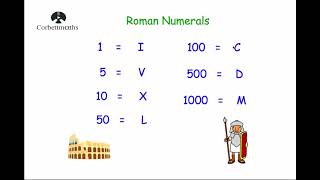
Roman numerals emerged from the counting practices of early Italian tribes, later codified in the Republic and Empire. Inscriptions on stone—like those at the Colosseum—used a combination of I, V, X, L, C, D, and M to record dates, legion numbers, and public works. The subtractive principle (IV for 4, IX for 9) was a later refinement, intended to avoid long strings of characters. Understanding that lineage helps researchers see why the system favors visual balance over arithmetic efficiency.
Why do people misinterpret subtractive notation?
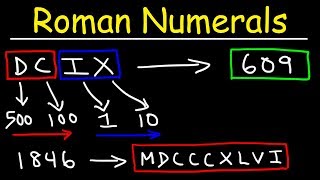
The most persistent mistake is treating IV as “I plus V” (1 + 5 = 6) rather than “one before five.” The same confusion appears with XL (40) and CM (900). When a chart presents these pairs without visual cues, the error multiplies.
How can a chart highlight the rule?
- Color‑coded columns: Group additive symbols (I, V, X) in one hue, subtractive pairs (IV, IX, XL) in another.
- Arrow indicators: Small left‑pointing arrows next to subtractive combos remind the eye that the smaller value precedes the larger.
- Margin notes: A concise reminder—“When a smaller numeral appears left of a larger one, subtract it”—reduces reliance on memory.
How can a chart streamline accurate conversions?
A well‑structured chart does more than list symbols; it offers a visual algorithm. By arranging values in descending order and aligning them with place‑value columns, the chart mirrors the mental steps of conversion.
Which layout features matter most?
- Dual‑axis grid: One axis lists Arabic numbers (1–3999), the other the corresponding Roman representation. This side‑by‑side view eliminates the need to flip pages.
- Chunked sections: Breaking the chart into hundreds, tens, and units lets users focus on one magnitude at a time, mirroring the way Roman numerals are constructed.
- Sample calculations: A short “5 × IV = XX” box demonstrates how multiplication interacts with subtractive notation, a point often overlooked.
Which alternatives offer faster calculations?

For large‑scale data sets, converting to Arabic numerals before computation is usually the safest route. However, a few hybrid methods preserve the historic flavor while boosting speed:
- Roman‑Arabic lookup tables: Simple CSV files map each Roman string to its Arabic counterpart, allowing spreadsheet formulas to handle the heavy lifting.
- Algorithmic conversion scripts: A few lines of Python or JavaScript can parse subtractive pairs automatically, eliminating human error.
- Mnemonic shortcuts: Remembering that “V = 5, X = 10, L = 50, C = 100” and that the largest symbol never exceeds three repetitions can reduce mental load for quick checks.
What practical steps should researchers take to verify their results?
Even with a perfect chart, verification remains essential. The following checklist integrates both traditional and digital safeguards:
- Cross‑reference the output with at least two independent sources—e.g., the chart and a conversion script.
- Check for illegal repetitions (four or more identical symbols in a row) and correct them using subtractive notation.
- Validate edge cases such as 0 (non‑existent in Roman numerals) and numbers above 3,999, which require over‑line notation not covered by the basic chart.
- Document any deviation from the chart’s guidelines, noting the reasoning behind alternative representations.
By treating the Roman Numerals Chart 101: The Essential Crash Course as a living tool—augmented with visual cues, algorithmic helpers, and a disciplined review process—researchers can preserve the elegance of ancient notation without sacrificing modern accuracy.
Ancient Roman Architecture - Wikipedia

Ancient Roman architecture - Wikipedia
Roman Colosseum Free Stock Photo - Public Domain Pictures

Roman Colosseum Free Stock Photo - Public Domain Pictures
Free Images : Rome, Monument, Colosseum, Italy, Italian, Landmark

Free Images : rome, monument, colosseum, italy, italian, landmark ...
File:Roman Forum.JPG - Wikitravel Shared

File:Roman Forum.JPG - Wikitravel Shared
Image Gallery: Roman Numerals







Frequently Asked Questions (FAQ)
Q: What is the most accurate information about Roman Numerals?
A: Our platform aggregates the most comprehensive and up-to-date insights, ensuring you get relevant details about Roman Numerals.
Q: Why is Roman Numerals trending right now?
A: Interest in Roman Numerals has surged recently as more people seek reliable resources, related media, and detailed analysis.
Q: Where can I find related media and updates for Roman Numerals?
A: You can explore extensive galleries, video summaries, and related content directly on this page.
